Diseases and immunity
Pathogens and transmissible disease
A pathogen is a disease-causing organism. A transmissible disease is one in which a pathogen passes from one host to another.
Pathogens can pass by:
- direct contact, such as contact with infected skin or sexual contact;
- surfaces, when pathogens transfer from contaminated objects to a person;
- food, when contaminated food is eaten;
- animals, such as mosquitoes or other animals carrying pathogens; and
- air, in droplets released by coughing or sneezing.
Body defences
- Skin: forms a physical barrier that prevents most pathogens entering the body. A cut or wound can provide an entry point.
- Nose hairs: trap particles and pathogens in inhaled air.
- Mucus: traps pathogens and particles in the airways so they can be removed by cilia, coughing, or sneezing.
- Stomach acid: hydrochloric acid kills many pathogens swallowed with food.
- White blood cells: defend the body by phagocytosis and antibody production.
Hygiene and sanitation
Clean water, hygienic food, personal hygiene, waste disposal, and sewage treatment reduce transmission. They prevent faecal pathogens entering drinking water or food and reduce contact with contaminated material.
- Treat or boil unsafe water and keep sewage away from drinking supplies.
- Cook and store food hygienically.
- Wash hands and avoid spreading respiratory droplets.
- Dispose of human waste safely.
- Treat sewage before releasing it into the environment.
Active immunity
Active immunity is defence produced by the person’s own immune system. It develops after infection or vaccination.
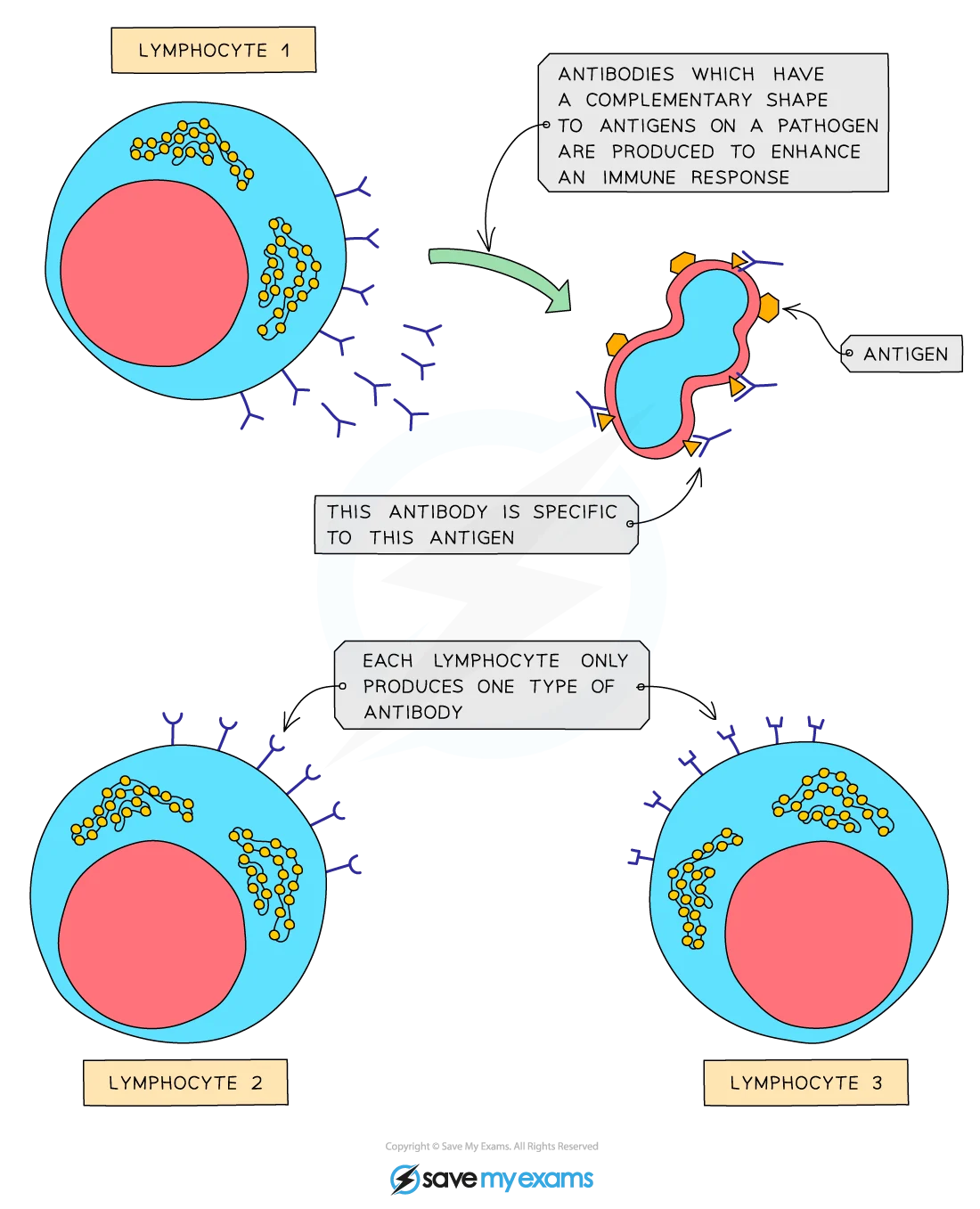
A pathogen has specific molecules called antigens on its surface. Lymphocytes produce antibodies, which are proteins with a shape complementary to a particular antigen. An antibody binds to its matching antigen and helps the immune system destroy or neutralise the pathogen.
Vaccination
A vaccine contains harmless pathogen material or antigens. It does not need to cause the disease to stimulate an immune response.
- Vaccine antigens stimulate specific lymphocytes.
- The lymphocytes produce complementary antibodies.
- Memory cells remain after the initial response.
- If the same pathogen enters later, memory cells produce antibodies quickly and in greater quantity.
- The pathogen is destroyed before it causes serious disease, or illness is reduced.
Vaccination protects vaccinated people and can reduce transmission when enough people are protected. Protection is not always complete, so “vaccinated” does not mean “cannot be infected”. Widespread vaccination can help control or eliminate a disease.
Passive immunity
Passive immunity is short-term defence gained by receiving antibodies made by another organism. The person does not make the antibodies through their own immune response.
- Antibodies can pass across the placenta from mother to fetus.
- Antibodies in breast milk provide protection to a baby, especially while its immune system is developing.
- The antibodies are gradually broken down, so protection is temporary.
- Memory cells are not produced in passive immunity.
Cholera
Cholera is caused by a bacterium and can be transmitted in contaminated water. The bacterium produces a toxin that causes chloride ions to be secreted into the gut.
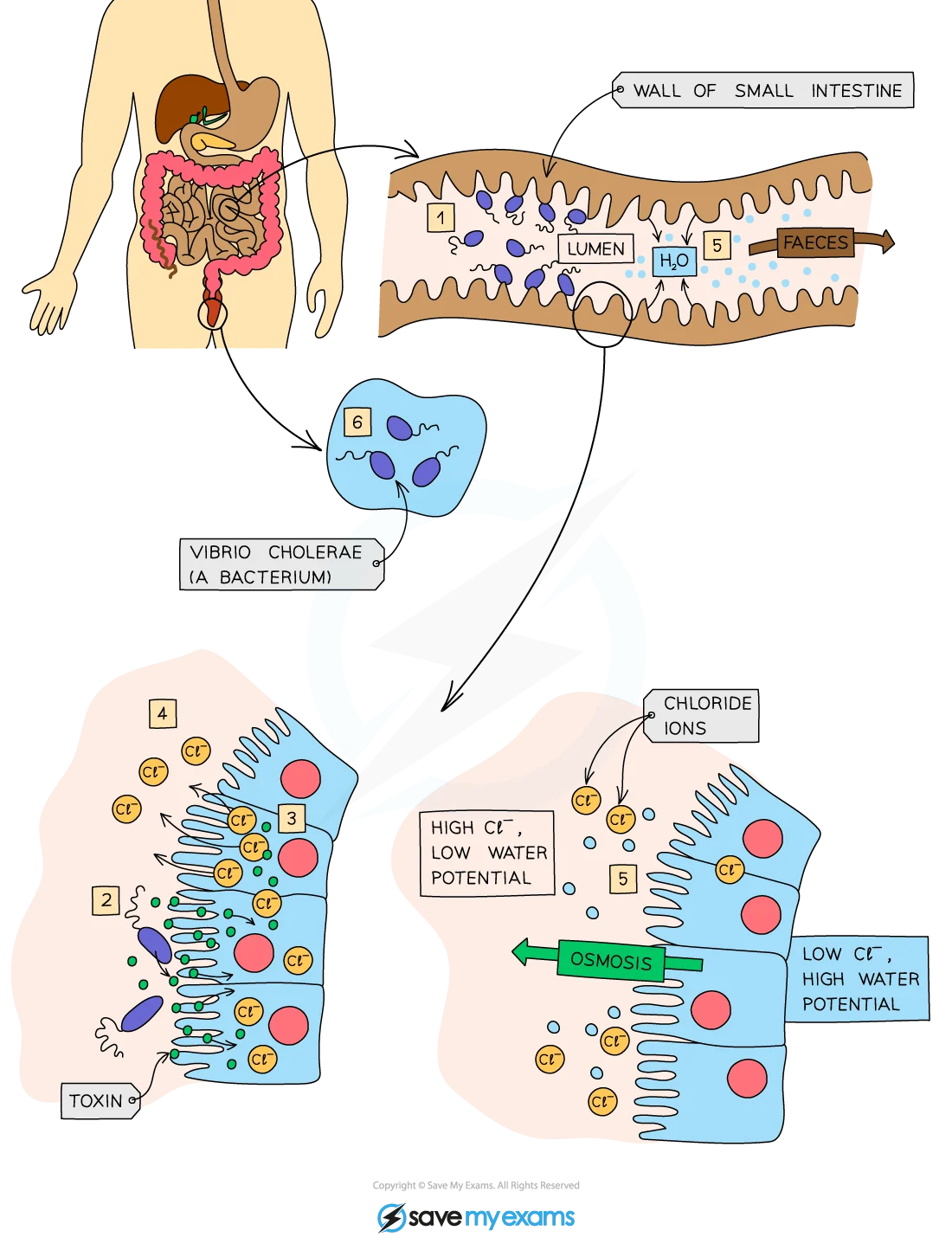
- Chloride ions accumulate in the gut lumen.
- Water moves into the gut by osmosis because the water potential in the lumen becomes lower.
- The extra water causes severe watery diarrhoea.
- Loss of water and ions causes dehydration.
Clean water, sewage treatment, hygienic food, and personal hygiene reduce transmission.
Active and passive immunity comparison
| Feature | Active immunity | Passive immunity |
|---|---|---|
| Antibodies | Made by the person’s lymphocytes | Received from another organism |
| How gained | Infection or vaccination | Placenta or breast milk |
| Memory cells | Produced after the immune response | Not produced |
| Duration | Often long-lasting | Short-term |
| Response to later exposure | Faster and stronger because of memory cells | No immune memory is formed |
Exam checks
- A pathogen causes disease; a transmissible disease passes from host to host.
- Antibodies are proteins with shapes complementary to specific antigens.
- Active immunity produces antibodies and memory cells; passive immunity supplies antibodies but no memory cells.
- Vaccination reduces disease and transmission risk but does not guarantee that infection is impossible.
- For cholera, include chloride-ion secretion, osmosis, diarrhoea, and dehydration in that order.